Emergency tree and stump gardeners in Deptford with fast response
When a tree is hanging badly after a storm, a stump has heaved up a path, or a fallen branch is blocking access, you do not want to spend hours phoning around. You want someone who understands the urgency, arrives quickly, and knows how to make the area safe without turning a bad moment into a bigger mess. That is exactly where Emergency tree and stump gardeners in Deptford with fast response become essential.
In Deptford, where gardens can be compact, access can be tight, and neighbouring properties sit close together, fast action matters. One unstable limb can damage fencing, decking, glass, or even a parked car. A stubborn stump can be a trip hazard one day and a project-stopping obstacle the next. This guide explains what emergency tree and stump work actually involves, how a rapid response usually works, what to check before booking, and how to avoid the mistakes that make stressful situations worse. A little clarity goes a long way, honestly.
Why Emergency tree and stump gardeners in Deptford with fast response Matters
Tree emergencies are rarely neat. One gusty evening and a branch is resting across a drive. A weakened tree may start to lean after heavy rain. A stump left from a previous removal can break up paving, trap roots, or become a nuisance in a narrow side passage. In these moments, speed is not just convenient, it is part of the solution.
Emergency tree and stump gardeners in Deptford with fast response matter because they help reduce immediate risk. That can mean making a tree stable, clearing hazardous debris, or removing a stump that is causing an obstruction. In a dense urban area, safety and access are linked. If a tree is partly down, every minute can increase the chance of further damage from wind, vibration, or accidental contact.
There is also the human side of it. You may be dealing with neighbours asking questions, children trying to get past the garden gate, or a front path that suddenly feels unusable. A calm, fast response helps restore control. You are not trying to do everything at once; you are trying to make the situation safe, then deal with the tidy-up and longer-term fix.
For broader garden support after the urgent work is handled, it can help to look at related services such as tree lopping and removal, garden clearance, and garden maintenance. Those pages are useful if the emergency is part of a wider repair or recovery job.
How Emergency tree and stump gardeners in Deptford with fast response Works
Fast-response tree and stump work usually follows a practical sequence. The precise details depend on the site, but the aim is consistent: assess the hazard, control the risk, and complete the right level of work as quickly as is safely possible.
First comes the initial call or enquiry. You explain what has happened, where the tree or stump is, and whether anything is currently at risk. A good provider will ask focused questions: Is the tree touching power lines? Is access blocked? Is the stump exposed, loose, or damaging paving? These questions are not fussiness. They shape the response and the equipment needed.
Next is the site assessment. Sometimes that happens on arrival; sometimes a quick photo-based review gives enough information to start planning. The team will look at the tree's condition, the direction of lean, any hanging branches, the ground stability, and nearby structures. For stump work, they will check whether it is in soil, tarmac, paving, or a tight corner where machinery may need careful positioning.
Then comes the control stage. That can mean cordoning off an area, cutting down unstable limbs, removing loose material, or grinding a stump down to a manageable level. If the job is more complex, it may be done in stages. Truth be told, a rushed but unsafe job helps nobody.
Finally, there is the tidy-up and practical finish. That might include removal of brash, logs, stump grindings, or other green waste. If the emergency has left the garden looking a bit battered, many people follow up with landscaping or landscape gardening to put the area back together properly.
Key Benefits and Practical Advantages
A fast-response service is about more than speed for speed's sake. When it is done well, it brings a few very real advantages.
- Reduced risk of further damage: unstable trees and loose stumps can worsen quickly, especially in wet or windy conditions.
- Safer access: paths, drives, side returns, and garden entrances can be reopened sooner.
- Clear decision-making: a prompt assessment stops you guessing whether the tree can wait until next week. Sometimes it can't.
- Better neighbour relations: quick action helps limit disruption where properties sit close together.
- Less stress: once the hazard is managed, the whole situation becomes easier to think through.
- Cleaner follow-on work: the sooner debris and obstruction are handled, the easier later restoration becomes.
There is also a practical financial angle. Delaying action can sometimes increase the overall job size if a partially damaged tree continues to fail or a stump keeps affecting paving, steps, or drainage. That does not mean every problem needs immediate removal. It means a quick, professional judgment can save you from making a costly guess.
Expert summary: Fast-response tree and stump gardeners are most valuable when they combine calm assessment with safe, decisive action. Speed matters, but control matters more.
Who This Is For and When It Makes Sense
This kind of service is for anyone facing an immediate or near-immediate tree-related risk. In Deptford, that might be a homeowner with a leaning ornamental tree, a landlord dealing with a damaged rear garden, or a property manager trying to keep access routes clear after rough weather.
It also makes sense for:
- homes with overgrown or poorly maintained trees near boundaries
- gardens where a stump has started to lift slabs or damage edging
- properties with narrow access where fallen timber creates a genuine obstruction
- situations involving storm damage, partial collapse, or hanging branches
- sites being prepared for new planting, decking, or broader redesign work
If the issue is less urgent but still important, you may be better off booking a planned visit rather than an emergency attendance. For example, a stump that is annoying but stable might be handled alongside lawn mowing, hedge trimming, or other routine care. On the other hand, if the stump is causing a trip hazard or blocking a key part of the garden, do not sit on it for too long.
And yes, it can feel a bit dramatic calling something "emergency" when you are trying to keep a level head. But if a branch is moving in the wind or the stump is making a route unsafe, that label is there for a reason.
Step-by-Step Guidance
If you are dealing with a tree or stump problem right now, the simplest way to handle it is step by step. No heroics. Just a clear sequence.
- Make the area safe. Keep people, pets, and vehicles away from the hazard. If a branch looks ready to drop, do not stand under it for a better look. That sounds obvious, but people do it.
- Take a few clear photos. Wide shots and close-ups help explain the issue. Include the base of the tree, the lean, the stump position, and any nearby damage.
- Note access details. Can equipment fit through the side gate? Is there street parking? Is the stump in a rear garden with limited access? Those details matter a lot in Deptford's tighter spaces.
- Explain what changed. Storm damage, recent root movement, decay, or a fresh crack in the trunk all point to different responses.
- Ask what will happen on arrival. A clear provider should tell you whether the first visit is for making safe, removal, stump grinding, waste clearance, or a combination.
- Confirm the finish. Will the debris be removed? Is the stump left below soil level? Will the area be left ready for replanting or restoration?
That's the core of it. Keep communication simple, make the site safe, and let the professionals do the awkward part. In our experience, the jobs that go best are the ones where the customer gives straightforward details and the contractor arrives with a clear plan rather than a vague hope.
Expert Tips for Better Results
There are a few small things that make a big difference when you need a rapid response.
- Describe the risk, not just the tree: say whether the issue is blocking access, touching a structure, or creating a trip hazard.
- Send one wide image and one close image: too many photos can confuse the picture; a couple of clear ones are usually enough.
- Flag any hidden constraints: low walls, tight gates, awkward alley access, delicate paving, or nearby sheds should be mentioned early.
- Ask about disposal: emergency work often creates green waste quickly, and you want to know whether removal is included.
- Be realistic about timing: fast response does not always mean instant arrival, especially during severe weather when multiple urgent jobs may come in at once.
- Think beyond the emergency: if the tree or stump has exposed underlying layout problems, follow-up garden work may be worth planning soon after.
One useful habit is to keep a simple garden record: when trees were last pruned, whether a stump was cut before, and if drainage or soil movement has been noticed. It sounds a bit tidy, I know, but when an urgent call comes, those little notes make decisions faster.
If you want to understand more about the standards behind service quality, it can also help to review pages such as insurance and safety and health and safety policy. They give you a better sense of how a professional provider should approach risk.
Common Mistakes to Avoid
Emergency jobs go wrong most often because someone tries to shortcut the important bit. The following mistakes are common, and avoidable.
- Trying to remove dangerous branches yourself: a leaning or damaged tree can shift unexpectedly.
- Ignoring the stump: a stump is not just leftover wood; it can be a trip point, a mowing obstacle, and an access issue.
- Booking only on price: low-cost in an emergency can be false economy if the provider is not equipped for safe work.
- Failing to mention nearby hazards: cables, glass, fences, sheds, and tight access all affect the job.
- Not checking what "fast response" means: ask whether it means same-day attendance, emergency call-out, or simply a quick reply to your enquiry.
- Leaving the site open to children or pets: the garden can look calm while still being unstable underfoot.
Another one, slightly less obvious: people sometimes assume stump work is always straightforward. It isn't. A stump near paving, decking, or buried services needs a careful approach. If you are also planning outdoor improvements, the relationship between stump removal and later works like decking services or landscaping should be thought through early, not at the last minute.
Tools, Resources and Recommendations
Emergency tree and stump work relies on the right kit and the right judgment. The exact tools used will vary, but a capable team will usually work with equipment suited to stabilising, cutting, grinding, and clearing safely.
Typical tools and materials may include:
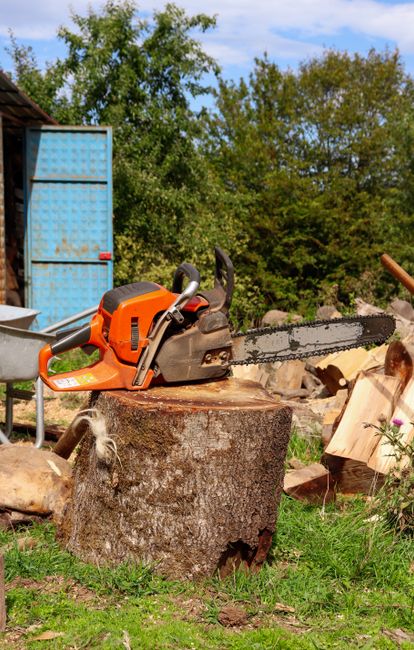
- chainsaws and pruning tools for controlled cutting
- stump grinders for below-ground reduction
- ropes, straps, and supports for stabilising certain cuts
- protective equipment such as helmets, gloves, eye protection, and sturdy footwear
- barriers or markers to keep the work zone clear
- waste-moving equipment for logs, branches, and stump arisings
From a homeowner's point of view, the most useful "resource" is often preparation. Keep gate keys handy, clear a route if you safely can, and know where the water, lights, or outdoor sockets are if relevant. Little things. But they shave time off the job.
For practical service planning, the pages on services overview and pricing and quotes can help you understand how urgent tree work fits alongside other garden tasks and what to ask before booking.
Law, Compliance, Standards and Best Practice
Emergency tree work should always be approached carefully and within normal UK expectations for safety and responsibility. The exact obligations depend on the site, ownership, and the nature of the hazard, so it is sensible to treat this section as general guidance rather than legal advice.
Best practice usually means:
- making the area safe before work begins
- using competent operators with suitable equipment
- checking for property boundaries and likely hazards
- disposing of waste responsibly
- communicating clearly about what will and will not be done in the emergency visit
If a tree is near a boundary, shared access route, or structure, it is wise to be cautious about who owns what and what work is actually needed. That does not have to become a drama. Usually, a calm inspection and clear explanation solve most issues. If a situation is obviously dangerous, the priority is to reduce the immediate risk, then sort the paperwork and follow-up properly.
It can also be sensible to look at a provider's approach to safety, payment, complaints, and data handling. Those pages are not flashy, but they tell you a lot. For example, a transparent business should make its approach to payment and security and complaints procedure easy to understand. That is a reassuring sign, plain and simple.
Options, Methods, and Comparison Table
Not every tree or stump problem needs the same approach. Sometimes the smartest choice is to make safe now and finish later. Other times, immediate removal is the right call. The table below gives a practical comparison.
| Method | Best for | Typical advantage | Things to watch |
|---|---|---|---|
| Emergency make-safe | Immediate hazards, hanging branches, unstable trees | Reduces risk quickly | May not complete full removal on the first visit |
| Tree lopping and removal | Severely damaged or unwanted trees | Clears the problem fully | Can require more time and access |
| Stump grinding | Stumps blocking access or future planting | Removes the obstacle below ground level | Needs careful handling near paving and utilities |
| Garden clearance | Storm debris, mixed waste, and end-of-project tidy-up | Restores usability fast | May be needed alongside other services |
| Planned follow-up maintenance | Recovered gardens, ongoing growth control | Keeps the space in shape | Not suitable for active hazards |
If your problem is limited to a stump and you are not facing an immediate hazard, the better long-term answer may be a planned removal rather than an emergency call-out. If the garden needs resetting afterwards, combining the work with garden clearance or garden maintenance can save time later on.
Case Study or Real-World Example
A fairly typical Deptford scenario goes like this. After a windy night, a homeowner notices a medium-sized tree in the rear garden has shifted. It is not fully down, but a thick branch is now resting awkwardly against a fence panel, and the base looks disturbed. There is a narrow side return, a neighbour's patio just beyond the boundary, and the family needs the garden access open for the next morning.
The sensible response is not to start tugging at the branch. The owner takes a couple of photos from a safe distance, keeps the area clear, and requests a fast-response visit. On inspection, the immediate priority is to make the tree safe and remove unstable material. The stump from a separate, older cut tree is also found to be lifting a section of paving nearby, so that gets assessed for grinding or removal once the hazard is dealt with.
The result is not dramatic, and that is the point. The access is reopened, the branch risk is removed, and the stump is no longer a trip point. A later visit can then focus on restoring the garden properly, perhaps with new planting or a small layout change. Not glamorous, but it works.
That sort of job is exactly why fast-response tree and stump gardeners are useful. They do not just "cut things down". They buy back safety, space, and a bit of breathing room when the garden suddenly stops feeling ordinary.
Practical Checklist
Use this checklist if you need emergency help with a tree or stump in Deptford.
- Keep people, pets, and vehicles away from the hazard
- Take safe photos from a distance
- Note whether the problem is leaning, fallen, cracked, or blocked
- Check and describe access routes, gates, and parking
- Say whether the issue is affecting a path, drive, fence, or structure
- Ask what the attendance includes: make-safe, removal, stump work, tidy-up
- Confirm how waste will be handled
- Ask whether follow-on landscaping or clearance may be needed
- Review the provider's safety and payment information
- Arrange the next stage once the immediate hazard is under control
Quick reminder: if you are unsure whether the situation counts as urgent, treat it cautiously. It is easier to downgrade a non-urgent call than to explain why a known hazard was left too long.
If you are ready to take the next step, speak to a local team that can assess the situation quickly and explain the safest route forward. For a straightforward starting point, you can review about us and then move on to the most relevant service or quote page when you are ready.
Get a free quote today and see how much you can save.
Conclusion
Emergency tree and stump work is one of those jobs where good timing, clear communication, and safe execution matter far more than fancy language. In Deptford, where gardens can be compact and access is often tight, a fast response can prevent a small problem becoming a much larger one.
The main thing to remember is simple: make the area safe, describe the issue clearly, and choose a provider that understands both urgency and care. Whether the job ends up being stump grinding, tree removal, garden clearance, or a broader tidy-up, the right response will leave you with a safer, more usable space. And that's a relief you can feel almost immediately.
When the dust settles and the garden is back to normal, it really does feel better to stand there with a cup of tea and no wobbling branches overhead.
Frequently Asked Questions
What counts as an emergency tree problem in Deptford?
An emergency usually means the tree or branch is actively unsafe, blocking access, threatening property, or at risk of falling. A stump can also become urgent if it is causing a serious trip hazard or blocking a route.
How fast can a fast-response tree and stump gardener arrive?
That depends on the provider, workload, weather, and access. Fast response typically means the issue is treated as a priority, but it does not always mean instant arrival. Severe weather can slow everyone down a bit.
Should I try to remove a damaged branch myself?
No, not if it is unstable, high up, or close to structures or wires. Damaged trees can shift without warning. It is safer to keep clear and let trained people handle it.
Can a stump be removed during an emergency visit?
Sometimes, yes. If access, equipment, and safety conditions allow, the stump may be ground or reduced on the spot. In other cases, the first visit is used to make the area safe and schedule the full stump work later.
What information should I give when I call for help?
Tell them what happened, where the tree or stump is, whether anything is blocked, and what nearby hazards exist. Photos are often very helpful, especially if access is tight.
Will emergency tree work include waste removal?
Often it does, but not always in the same way. Some jobs include full clearance, while others focus first on making the site safe. It is sensible to ask exactly what is included before the work starts.
How do I know if a stump needs urgent attention?
If it is lifting paving, creating a trip hazard, interfering with access, or making follow-on work impossible, it may need prompt attention. If it is stable and simply inconvenient, it may be fine for a planned visit.
Do I need to prepare the garden before the team arrives?
Only safely. Keep the area clear, move people and pets away, and make access easy if you can do that without going near the hazard. Do not try to move heavy debris yourself if it feels risky.
Is emergency tree work more expensive than planned work?
It can be, because urgent call-outs may involve out-of-hours attendance, tighter scheduling, or more complex risk management. For fairness, the exact price depends on the job, access, and how much work is needed.
What if the tree damage is near a fence, decking, or patio?
That should be mentioned early. Nearby structures affect the method and the level of care required. If restoration is needed afterwards, services such as decking services or landscaping may come into the picture later.
Can I book emergency help and follow-up maintenance together?
Yes, and that is often a smart approach. The emergency visit handles the immediate risk, then planned work such as garden maintenance helps keep the space in better condition afterwards.
What should I check before choosing a provider?
Look for clear safety information, transparent pricing guidance, a sensible complaints process, and good communication. A provider that explains the work plainly is usually easier to trust in a stressful moment.