Gardener Deptford — Recycling and Sustainability
 Gardener Deptford is committed to developing an eco-friendly waste disposal area and a resilient sustainable rubbish gardening area across our sites. Our recycling and sustainability programme sets a clear recycling percentage target: we are aiming for a 65% recycling rate by 2030, with intermediate milestones of 50% by 2026. That target is supported by regular monitoring of tonnages, contamination rates and carbon intensity, so progress is tangible and actionable. Staff training, community engagement and visible signage are part of the plan to change day-to-day routines and embed sustainable disposal habits.
Creating a practical sustainable waste disposal zone requires careful on-site planning and consistent operations. We use segregated container banks for green waste, mixed recyclables and residuals, plus dedicated boxes for plastic pots, metal stakes and glass shards. To reinforce good practice we combine infrastructure with behaviour nudges: clear labelling, visual examples of acceptable items, and short staff briefings before every major clearance. Our model of eco waste management also supports composting cycles on-site, turning cuttings and pruning waste into finished compost to nourish community beds and reduce imported soil needs.
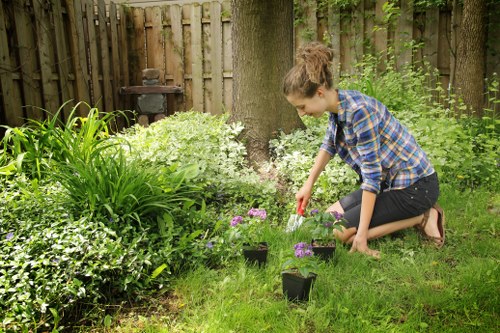 The way boroughs approach waste separation has influenced our layout and communications — Lewisham and Greenwich have colour-coded schemes for garden and food waste, and we mirror those systems where practical to simplify recycling for residents and contractors. We collect site-level data and feed it back into operational changes: if glass contamination rises, we adjust containment; if plastic pot returns are high, we increase dedicated collection points. This iterative method helps Gardener Deptford link local operations to wider municipal recycling and sustainability ambitions.
Sustainable collection, transfer and partnerships
Logistics make a big difference to carbon footprints. Gardener Deptford uses a mix of low-carbon vans (plug-in hybrid and fully electric vehicles), electric cargo bikes for local drops and carefully planned route optimisation to reduce mileage and idle time. These low-emission vehicles are not only cleaner on the road but are configured to prevent cross-contamination of loads, with sealed compartments for green waste. Fleet maintenance, charging infrastructure and driver training are part of our low-carbon transport plan to ensure reliability and maximise emission reductions.
 Local transfer stations and materials recovery facilities (MRFs) are essential hubs in our circular approach. We coordinate collections to municipal transfer sites in Deptford and neighbouring boroughs that accept green garden waste, wood for chipping, and soils for processing. Some loads go to anaerobic digesters or industrial composting facilities for material-specific treatment, while mixed recyclables go to an MRF for sorting. Working directly with these facilities improves material quality, shortens haul distances and reduces overall transport emissions linked to our sustainable waste disposal area.
Strong partnerships with charities and community organisations are central to turning waste into local value. We collaborate with community allotments, reuse centres and tool libraries that accept surplus pots, functioning tools and salvaged timber. These alliances ensure that reusable items are diverted from disposal and re-enter the local economy — a core principle of recycling and sustainability. We also support local projects that use compost or reclaimed materials for planting schemes, creating visible, positive outcomes for neighbourhoods.
Designing a resilient sustainable rubbish gardening area
Design matters: a well-thought-out sustainable rubbish gardening area reduces contamination, increases recovery rates and speeds up on-site workflows. Our site design includes clearly labelled bays for separated streams, secure storage for bulky materials, weatherproof shelters for compost maturation and easy access for low-carbon vans. Recommended separation points include:
- green/garden waste for on-site or municipal composting
- wood and timber for chipping and reuse
- plastic pots and trays for specialist recycling
- metals, glass and inert materials for recovery
 Reducing embodied carbon in infrastructure is another focus area. We favour second-life storage solutions, repurposed pallets and low-impact materials for new bins and shelters, and procure equipment with clear end-of-life plans. Tracking both tonnage diverted and estimated carbon savings allows Gardener Deptford to report not only on weight diverted from landfill but on greenhouse gas reductions achieved through measures like our low-emission fleet and shorter transfer journeys.
 Delivering on our recycling and sustainability objectives requires community buy-in and continuous improvement. By aligning with borough recycling schemes, investing in low-carbon logistics, coordinating with local transfer stations and forming partnerships with charities, Gardener Deptford builds a circular, localised approach to garden waste. We want every cutting, pot and piece of timber to be an asset not a burden, and our combined targets, site design and collaborative networks are designed to make that possible while contributing to broader municipal targets and local environmental quality.